How it works
What happens after the cameras go up
A camera system is only as good as the day something fails. Ours runs a test every night, tells you what it found and lets us fix most things without a visit. Here is the whole cycle.
The night test
Every night the recorder tests itself
At two in the morning the recorder checks every camera, disk, cable and battery and writes a log. A frozen camera is restarted, a filling disk is flagged. By seven you have a one-line summary, and so do we.
The lights went out, the cameras did not
The recorder and the cameras run from a battery for about an hour. The console notes the switch, and if the power is still off at dawn we call you.
A camera froze at two in the morning
The night test noticed the stream had stopped, cut power to that port for five seconds and brought the camera back. Nine seconds of picture were lost and nobody left their bed.
A disk started to fail
The recorder saw the error rate climb weeks before the disk died. A replacement went in on a planned visit, and the archive never had a gap.
Getting it built
Three visits from one team
Each visit has one job and leaves you with something to keep: a plan on paper, a system that runs, and a handover pack with every camera named.

01
Walk-through and plan
We walk the site with you and turn what worries you into camera positions on a plan. Coverage, blind spots and the price are settled on paper before anything is ordered.
02
Two routes to every camera
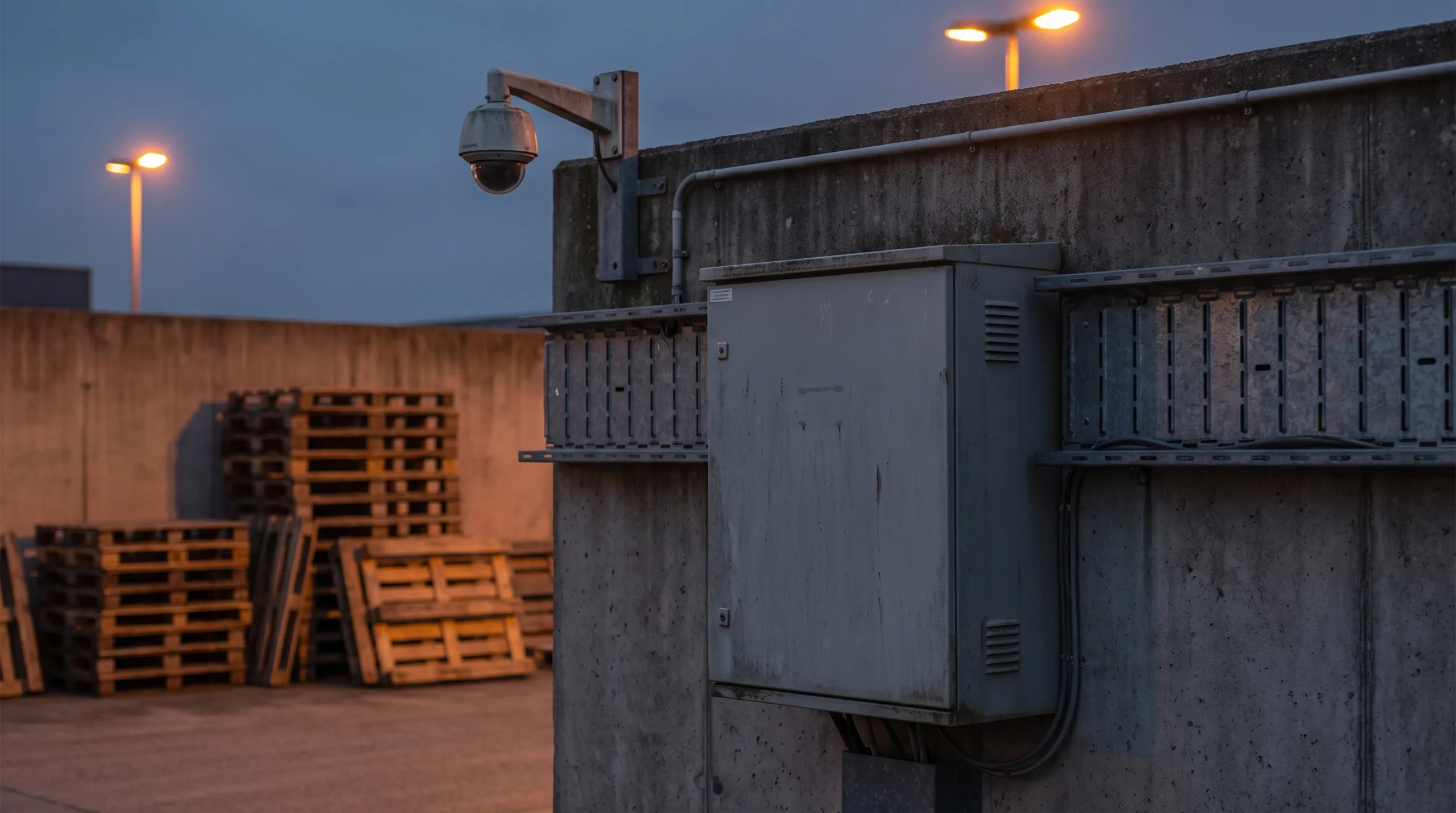
On large sites cameras are grouped by zone, and each group has two cable routes back to the recorders. One cut line does not take a zone off the screen, and the console shows which route is live.
03
Fitting day and handover
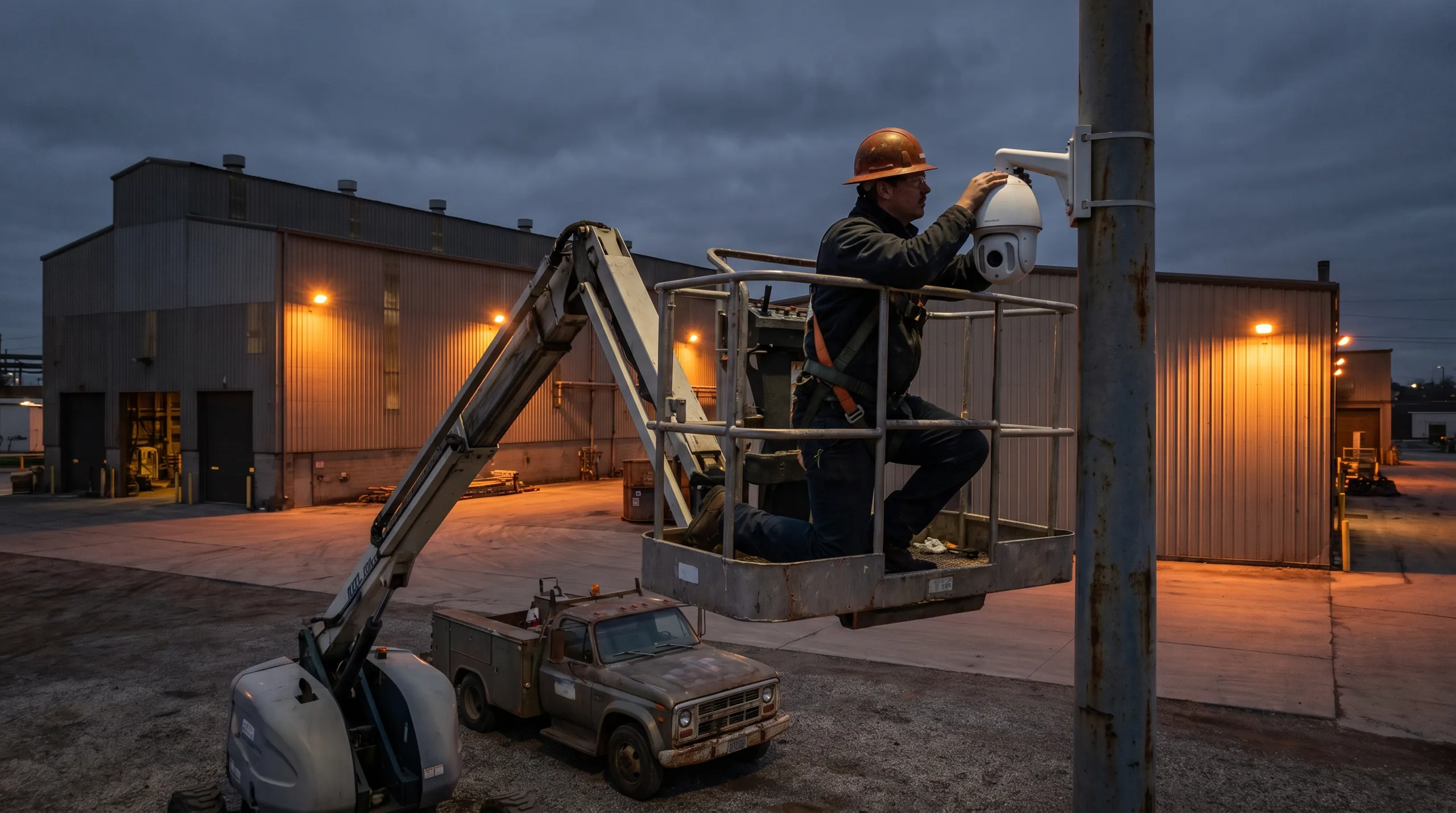
Cameras go up, cables are hidden, the recorder and the battery are tested. At handover we walk you through the console camera by camera and set who gets which alert.
The console
The duty manager’s view
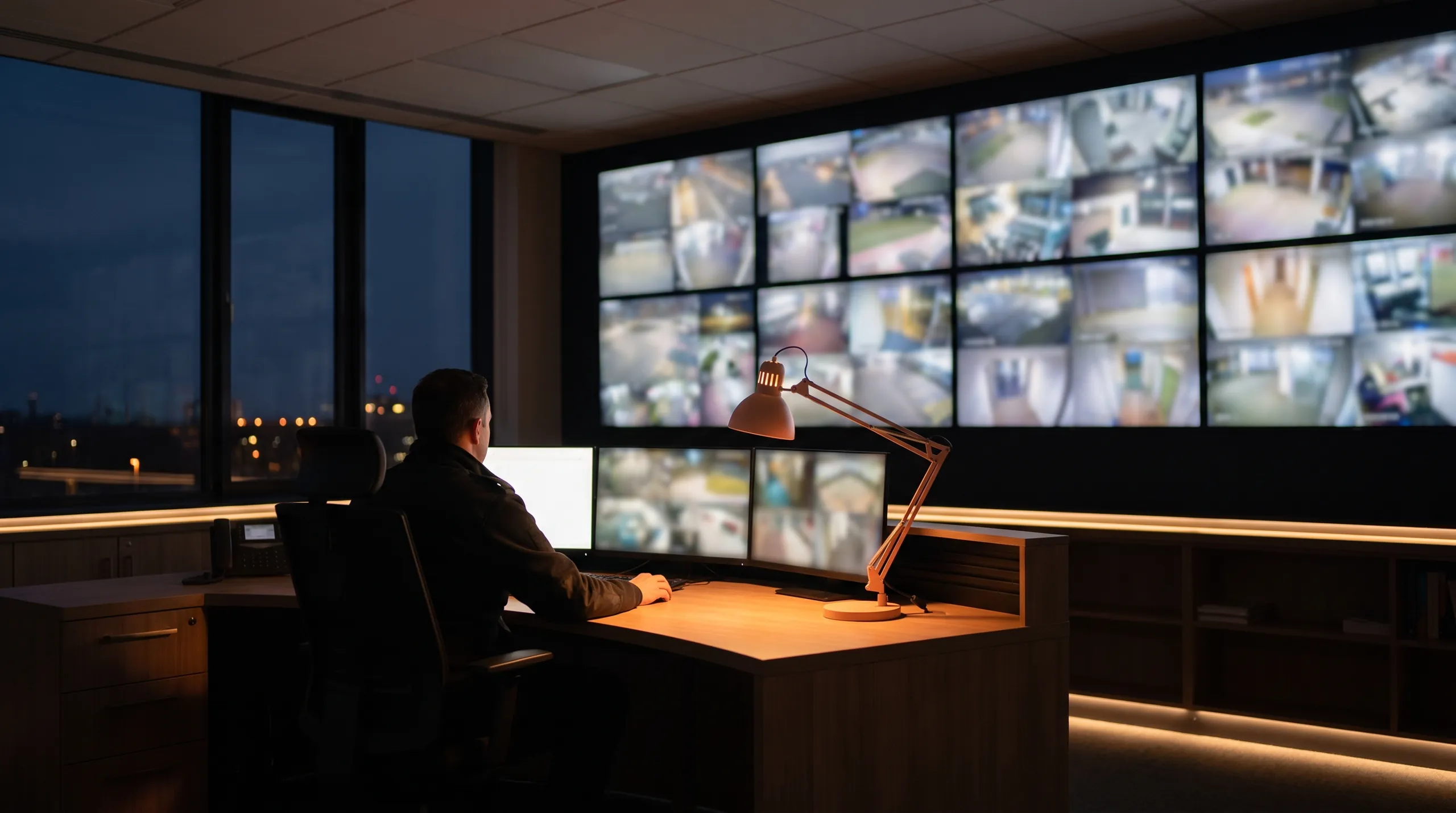
Live tiles, alerts with a place and a frame, and a health line for the system itself. Open a camera below to see what an alert looks like.
Fewer visits
Every trip we skip is money you keep
Call-outs, not cameras, are what a security system costs over ten years. So we built ours to be checked and fixed from our desk first and visited second.
Across our sites most tickets are closed remotely. The rest are bundled into a planned visit instead of an emergency one.
What is inside
The parts that keep it quiet
Works offline
Recording, alerts and the night test run on site. The internet is only needed to reach your phone.
Battery backup
About an hour of recording and alerts when the mains fail, with the switch written to the log.
Restart from the desk
A frozen camera or a stuck port is power-cycled remotely, most often by the night test itself.
Disk health
Error rates and free space are tracked, so a disk is replaced before the archive has a gap.
Alerts that name the place
Person at the back door, car at the gate. Each alert names the place and attaches a frame.
A morning summary
One line at seven o’clock: what the night test found and what it did about it.
Want to see it on your site?
An engineer walks your site for free, draws the coverage plan and puts a fixed price in writing. No obligation.
Get a quote